
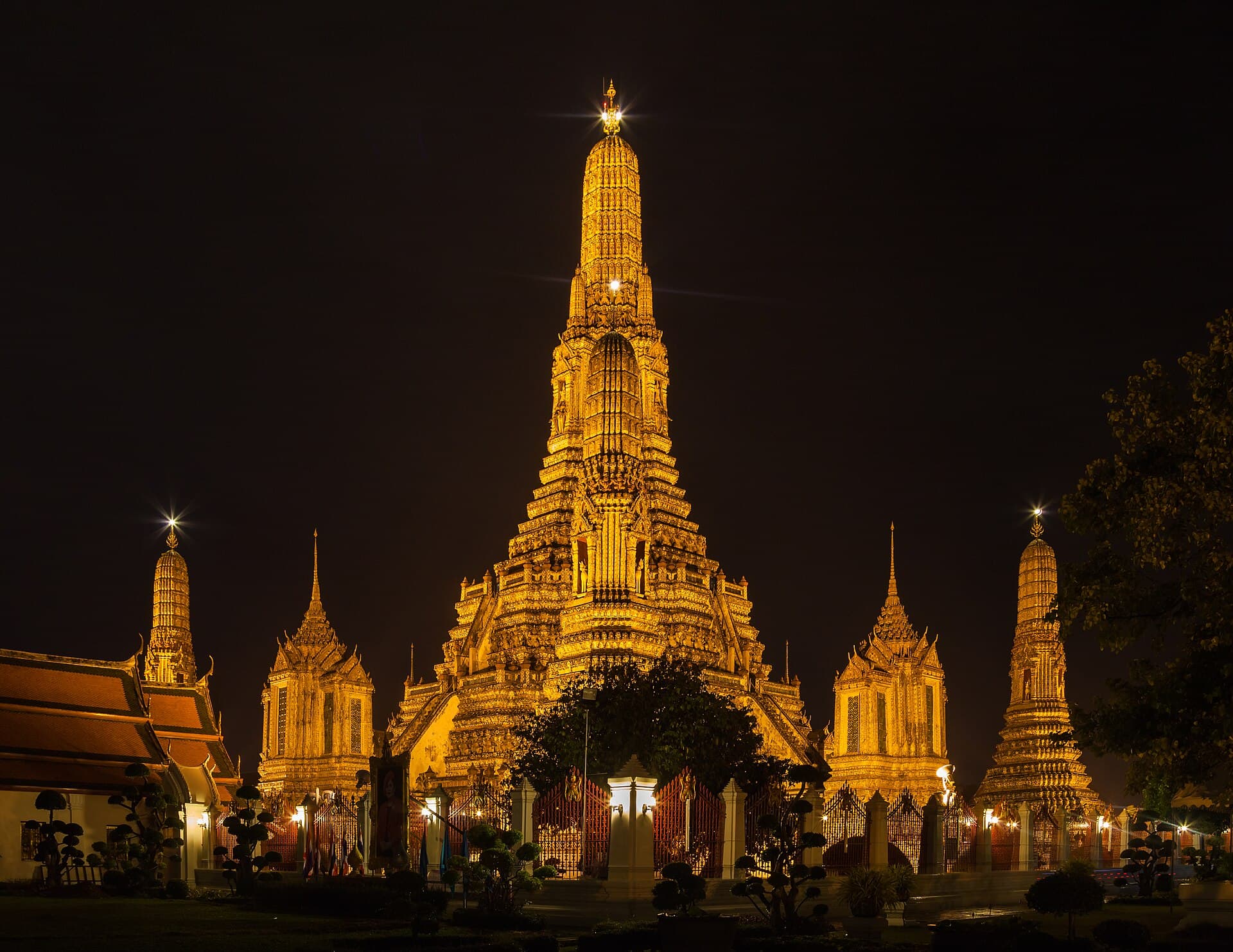
Three days in Bangkok is enough for a strong first trip, but only if you stop treating the city like one compact center. River sights, temple districts, mall-and-skytrain zones, and dinner neighborhoods all live on different rhythms. This plan groups them in a way that keeps transfers sensible, protects you from the usual heat-and-traffic burnout, and still leaves room to follow the part of Bangkok you end up liking most.
Map context
Bangkok 3-day itinerary map
Plot the main temple cluster, modern transit anchors, and optional tour zones that shape a sensible 3-day route through Bangkok.
Grand Palace
Bangkok
landmarkBest done early as part of a dedicated old-city morning.
Open Grand Palace in Google MapsWat Pho
Bangkok
landmarkNatural pair with the Grand Palace before the day gets too hot.
Open Wat Pho in Google MapsWat Arun
Bangkok
landmarkFits best as part of the same river-and-temple block rather than a separate trip.
Open Wat Arun in Google MapsLumphini Park
Bangkok
landmarkUseful reset point on the more modern day-two city loop.
Open Lumphini Park in Google MapsICONSIAM
Bangkok
landmarkOptional riverfront retail stop if you want a polished contrast to the temple districts.
Open ICONSIAM in Google MapsJim Thompson House
Bangkok
landmarkGood cultural stop near the Siam side without a major detour.
Open Jim Thompson House in Google MapsSiam
Bangkok
transportMain regrouping point for BTS-heavy sightseeing, shopping, and onward transfers.
Open Siam in Google Maps
Bookable ideas
Tours and activities to compare
Use these as a starting point, then verify the meeting point, cancellation terms, group size, and recent reviews before booking.
Bangkok canal and old-city boat tour
Boat tour
3–4 hours- Best for
- Visitors who want the river and klong side of Bangkok to make sense, not just flash by from a long-tail boat.
- Why book
- It shows a slower, more local-feeling side of Bangkok that many first-timers never really understand from the road network alone.
- Watch out
- Sun, humidity, and transfer logistics matter, so it is better booked for a day when you are not already overloaded.
Bangkok street-food evening walk in Chinatown
Food tour
3 hours- Best for
- Travelers who like food but do not want their first Chinatown night to be one long guess about where to start.
- Why book
- A good guide helps you spend your energy eating and noticing the area instead of hesitating at every turn.
- Watch out
- Expect crowds, heat, and a lot of standing; this is an energy-heavy evening, not a quiet sit-down dinner.
Grand Palace, Wat Pho, and Wat Arun guided route
Historic sights tour
4–5 hours- Best for
- First-time visitors who want the main temple circuit handled early and with more historical context.
- Why book
- It solves the classic Bangkok sightseeing block cleanly and can save you from piecing together the temple cluster inefficiently.
- Watch out
- Dress code, heat, and morning crowds are real constraints, so this is not a casual roll-out-late kind of tour.
Ayutthaya day trip from Bangkok
Day trip
8–10 hours- Best for
- Travelers who want one strong history-focused escape from the city.
- Why book
- It gives you the cleanest big contrast day from Bangkok if ancient ruins are a real priority.
- Watch out
- Only book it if you are genuinely happy using your third day outside the city rather than deepening the Bangkok stay itself.
Trip planning
Check guided options against the timing in this guide.
Use a tour for the part of Bangkok that is genuinely easier with help — temple context, canal navigation, or a big food neighborhood — and keep the rest of the trip flexible.
Browse Bangkok toursExternal partner or booking tool; check locations, terms, and current availability before committing.
Itinerary note 01
How to use this 3-day plan
Treat this itinerary as route logic, not a rigid timetable. Bangkok rewards grouping by geography far more than chasing a long list of famous names. The practical friction here is not only distance. It is heat, traffic, surprise rain, slower temple mornings, and the fact that one badly placed cross-city taxi can eat a big piece of the day. Build around one zone at a time, start temple-heavy blocks early, and leave yourself permission to slow down in the afternoon.
Itinerary note 02
Day 1: build your mental map in the easiest central zone
Start with the old city cluster while your legs and patience are freshest. Grand Palace, Wat Pho, and Wat Arun fit naturally together in a way that actually feels coherent on a first trip. Go early, dress for temple stops, and expect this part of Bangkok to feel hotter and less BTS-friendly than the city around Siam or Sukhumvit. That is exactly why it makes sense on day one: you get the classic monuments done before you start optimizing the trip around comfort and convenience. After the temple block, use the river or a short reset somewhere shaded instead of forcing one more major sight just because it is on the list.
Itinerary note 03
Day 1 evening: stay where dinner and atmosphere are naturally strongest
For your first evening, keep things easy rather than ambitious. Riverside, Chinatown, or a dinner area close to your hotel base all work better than a complicated hop across town after a hot day. This is the moment to notice what version of Bangkok you actually enjoy after dark: river views, dense street-food energy, or a more polished Sukhumvit or Silom night. That read matters because it should shape how you spend your flexible time later, especially if one neighborhood feels far more natural than the guidebook version you imagined.
Itinerary note 04
Day 2: do the denser classic-sights block while your energy is highest
Use day two for the easiest modern Bangkok block: Siam, Jim Thompson House, Lumphini Park, and whichever mall-or-food stop genuinely suits your trip. This part of the city is where the BTS and MRT start paying you back. It is also where Bangkok becomes much easier to use once you understand the station logic. Keep the day paced rather than overstuffed. Siam is useful for regrouping, shopping, and transit; Lumphini gives you breathing room; and Jim Thompson House works well as a cultural stop that does not require another citywide detour.
Itinerary note 05
Day 2 evening: add one guided or curated experience if it fills a real gap
Day two evening is the best slot for one guided experience if you want one. By then you know whether a Chinatown food walk, canal tour, or old-city evening experience solves a real gap in the trip or simply duplicates what you can already handle alone. A good Bangkok tour should do one of two things: explain a district you would otherwise skim, or remove just enough friction that you can enjoy a busy area instead of managing it. If you already feel confident moving around, skip the tour and use the evening for dinner somewhere that fits your base.
Itinerary note 06
Day 3: use the city's natural extension day
Let day three follow the trip you are actually having. If you loved the calmer side of Bangkok, use it for Ari, another park-and-café stretch, or a slower museum-and-lunch day. If food and evening neighborhoods are the highlight, save energy in the daytime and build toward Chinatown, Silom, or another dinner-led plan. If Ayutthaya is a genuine priority, this is the cleanest day to leave the city, but it should feel like a deliberate trade, not an automatic add-on. Bangkok has enough range to fill the third day well without leaving.
Itinerary note 07
When to book tours versus when to stay flexible
Book the part of Bangkok that is hardest to self-organize, not every activity that looks tempting online. That often means a limited-capacity food tour, a canal route you would not piece together confidently on your own, or a day trip where transport coordination is the whole value. Keep your temple mornings, mall stops, and neighborhood wandering flexible. Bangkok weather and energy levels can change quickly, and a little slack makes the city feel much friendlier.
Itinerary note 08
How to adjust this itinerary for different travel styles
Fast movers can add a market, rooftop, or museum to each day as long as it stays on-route. Slower travelers should remove one headline stop and protect the meal breaks, air-conditioning pauses, and river or park resets that keep Bangkok enjoyable. Families and mixed-energy groups usually do best by simplifying transfers and being realistic about midday heat. The best three-day Bangkok itinerary is not the one with the most pins on the map. It is the one that still feels good when the weather turns or the group gets tired.
Itinerary note 09
Mistakes that make a 3-day city trip feel rushed
The main mistake is mixing too many disconnected zones into the same day: temples in the morning, a far-off lunch, a mall stop, then a dinner reservation that requires another long ride. Bangkok can handle ambition, but it punishes bad sequencing. Another common mistake is underestimating how draining heat and slow traffic can feel by late afternoon. A lighter plan with better geography nearly always beats a busier one that looks stronger on paper.