
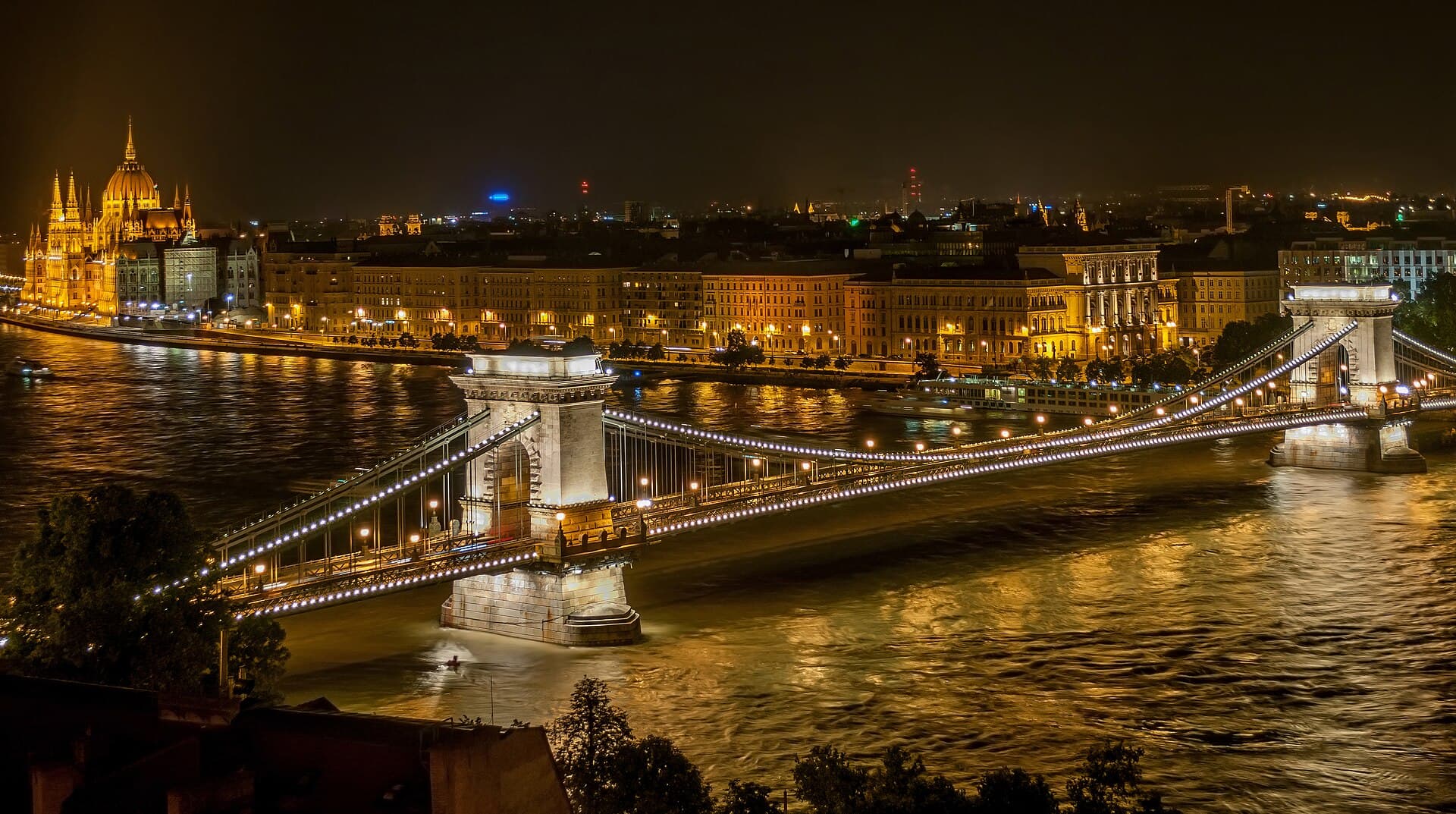
Three days in Budapest is enough for a very good first trip if you respect the city's natural geography. Pest is better for easy orientation, dinners, and transport; Buda is better when you give it an uninterrupted block instead of treating it like a quick detour between other plans. This itinerary keeps the river crossings intentional, leaves room for one bookable experience that actually adds value, and builds in enough breathing room that the city still feels enjoyable in heat, cold, or tired-leg reality.
Map context
Budapest 3-day itinerary map
Plot the main Budapest sight clusters, the river crossings that shape your day, and the optional tour anchors that can improve a 3-day trip without taking it over.
Parliament
Budapest
landmarkBest used as part of a broader District V orientation loop rather than an isolated stop.
Open Parliament in Google MapsSt. Stephen's Basilica
Budapest
landmarkNatural day-one anchor in central Pest, close to easy evening routes and Deák connections.
Open St. Stephen's Basilica in Google MapsChain Bridge
Budapest
landmarkHelpful crossing reference, but still part of a broader Pest-versus-Buda movement decision.
Open Chain Bridge in Google MapsBuda Castle
Budapest
landmarkWorks best when given an uninterrupted Buda-side block instead of a rushed add-on.
Open Buda Castle in Google MapsFisherman's Bastion
Budapest
landmarkClassic viewpoint stop that is better early or when paired with the rest of the castle-side hill area.
Open Fisherman's Bastion in Google MapsGreat Market Hall
Budapest
landmarkGood anchor for a lighter Pest-side morning or a day-three extension toward the market-and-river side.
Open Great Market Hall in Google MapsDeák Ferenc tér
Budapest
transportKey regrouping point for airport arrival, metro changes, and judging how much friction a revised plan adds.
Open Deák Ferenc tér in Google Maps
Bookable ideas
Tours and activities to compare
Use these as a starting point, then verify the meeting point, cancellation terms, group size, and recent reviews before booking.
Budapest walking tour on Pest side
Walking tour
2–3 hours- Best for
- First-time visitors who want District V, Deák, and the Jewish Quarter to make sense as one connected first-day map.
- Why book
- A good guide can explain why central Pest works so well, which makes every later walk and transit decision easier.
- Watch out
- In hot weather, exposed boulevards and square-heavy routes are more comfortable in morning or evening than at midday.
Danube evening cruise
River cruise
1–2 hours- Best for
- Travelers who want Budapest's riverfront drama without another long walking block.
- Why book
- It gives you one of the city's signature perspectives with very little energy cost, which is especially useful after a full Buda day.
- Watch out
- Pick the tone carefully: some products are calm sightseeing cruises, others skew more party-oriented than the title suggests.
Budapest thermal bath experience or entry add-on
Bath experience
2–4 hours- Best for
- Visitors who want to fit bath culture into a short trip without improvising the whole experience on the fly.
- Why book
- A bath block changes the rhythm of the trip in a distinctly Budapest way and can be a smart recovery move between heavier sightseeing stretches.
- Watch out
- Popular baths are often busy and social rather than silent, so book with realistic expectations.
Buda Castle district guided tour
Historic district tour
2–3 hours- Best for
- Travelers who want the castle side to feel like a place with layered history, not just a viewpoint collection.
- Why book
- This can be especially helpful if day two is your main Buda block and you want context to justify the extra walking effort.
- Watch out
- Uneven surfaces, inclines, and long standing periods matter more here than some tour pages make obvious.
Hungarian food or ruin-bar evening tour
Food and nightlife tour
3–4 hours- Best for
- Visitors who want one curated evening built around Hungarian food, nightlife context, or an easier introduction to the ruin-bar scene.
- Why book
- Useful when you want a social or food-led night but do not want to guess blindly which parts of District VII are worth the energy.
- Watch out
- Products vary widely, so read whether the focus is history, food, drinking, or general nightlife before booking.
Trip planning
Check guided options against the timing in this guide.
Use a tour for the part of Budapest that is genuinely easier or richer with help, then leave the lower-friction neighborhood time loose enough to respond to weather, baths, and energy.
Browse Budapest toursExternal partner or booking tool; check locations, terms, and current availability before committing.
Itinerary note 01
How to use this 3-day plan
Treat this itinerary as route logic, not a rigid schedule. It is built for a balanced first trip that wants the obvious landmarks, a few genuinely Budapest-specific experiences, and enough flexibility to respond to weather or energy. The main principle is simple: do not keep crossing the Danube just because two individual sights look close on a map. Budapest gets better when you let each side of the city have its own part of the day.
Itinerary note 02
Day 1: use central Pest to make the city feel easy
Start with District V and the Danube-facing core: Parliament area, the river promenade, St. Stephen's Basilica, and the Deák-to-Jewish-Quarter zone. Day one should make Budapest readable, not exhaustive. Walking this part of Pest helps you understand distances, tram usefulness along the river, and where the city shifts from polished central avenues into more restaurant- and nightlife-heavy streets. If you arrive on the 100E airport bus, this day also lets you build from the part of the city that most first-timers naturally use first.
Itinerary note 03
Day 1 evening: keep dinner in Pest and read the city's night personality
Do not spend the first evening forcing a complicated cross-river dinner plan unless there is a specific reason. Stay near your day-one path or your hotel base, then see which version of Budapest appeals more after dark: a quieter river walk, a polished District V dinner, or the louder restaurant-and-ruin-bar energy around District VII. That read is useful. It tells you whether tomorrow night should stay calm, become more social, or make room for a cruise or guided evening experience.
Itinerary note 04
Day 2: give Buda the uninterrupted block it deserves
Use day two for Buda Castle, Fisherman's Bastion, Matthias Church, and the surrounding hill area without constantly checking the clock. This side of Budapest rewards a slower pace more than a rushed checklist. Start earlier if crowding matters to you, and remember that the practical challenge here is not just sightseeing volume but elevation and walking effort. If you want the castle side to feel like more than a photo stop, this is the day to let it breathe.
Itinerary note 05
Day 2 evening: add one curated experience, not three
The second evening is usually the best slot for a guided experience because by then you know what the city still has not given you on its own. A Danube evening cruise can work well here if you want Budapest's riverfront lights with very little effort. A Pest walking tour or a food-and-ruin-bar evening can also make sense if you want more context or a more social night. The key is to choose one experience that deepens the trip rather than stacking multiple bookings into the same evening.
Itinerary note 06
Day 3: choose between baths-and-boulevards or one final contrast block
Make the third day your flexible extension day. A strong version combines a thermal-bath block with Andrássy Avenue, Heroes' Square, the market side of Pest, or a final Danube walk. This is also the day to pace differently depending on season. In summer, a bath or indoor break can save the trip from becoming one long hot march. In winter, a slower café-and-sightseeing rhythm usually works better than trying to imitate peak-season speed. Day three should round out the city, not prove your stamina.
Itinerary note 07
When to book tours versus when to stay flexible
Book the part that is genuinely improved by structure or limited capacity. In Budapest, that often means a Danube cruise, a guided Buda Castle walk if history context matters to you, or one food- or nightlife-led experience you actively want. Keep ordinary neighborhood wandering flexible. Budapest is a city where weather, bath timing, or a district you unexpectedly enjoy can improve the trip more than one extra prebooked stop.
Itinerary note 08
How to adjust this itinerary for your travel style
Fast movers can start early, reserve hotter or colder midday hours for lunch or indoor sights, and use evenings for the city's strongest atmosphere. Slower travelers should happily cut one lower-priority landmark and replace it with a long meal, a river walk, or time at a bath. If you are traveling with older relatives, children, or anyone with limited mobility, simplify day two in particular: Buda's beauty comes with more walking strain than the map first suggests.
Itinerary note 09
Mistakes that make a 3-day Budapest trip feel rushed
The biggest mistakes are underestimating the Pest-versus-Buda divide, treating thermal baths like a tiny add-on instead of a real time block, and overbooking evenings before you know your energy. Another common error is assuming every Danube-facing activity belongs in the same day. Budapest usually feels better when you group by geography and let one optional thing go. Three good days beat three overplanned ones.