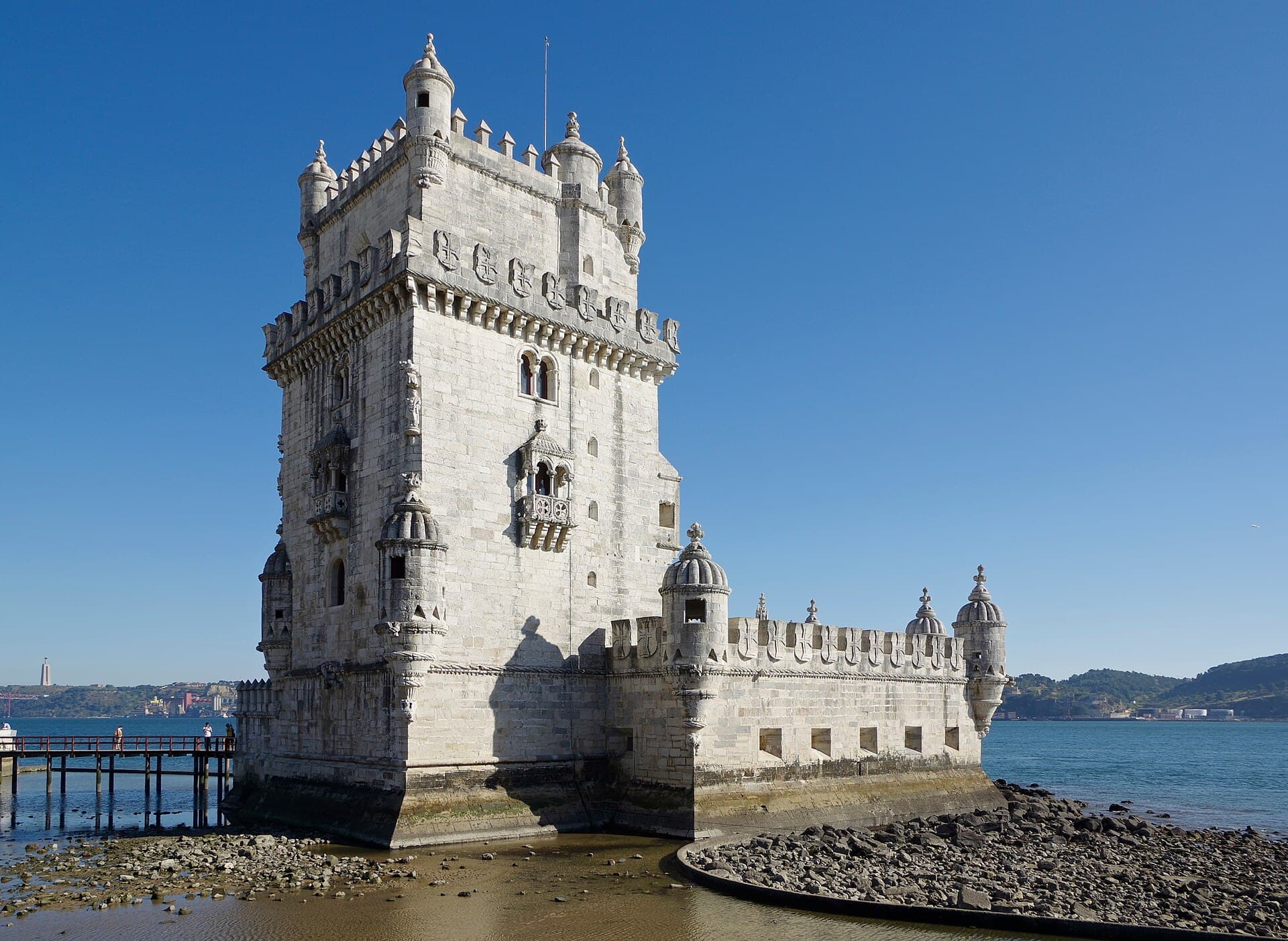
Belém Tower is better as the anchor of a west-Lisbon outing than as a one-off stop. The area works when you treat it as a cluster: tower, monastery, riverfront, pastries, and one or two additional choices that match your energy. It works badly when you try to cram every museum, every monument, and a peak-hour pastry line into the same afternoon. Belém is more open, more spread out, and more queue-shaped than the historic center, so planning the area as a coherent route matters more than people expect.
Good fit if…
- • first-time visitors building a classic Lisbon sightseeing day
- • travelers interested in monuments and riverfront walking
- • families who prefer broad outdoor space over dense hill neighborhoods
Skip it if…
- • you only want spontaneous wandering in tight historic lanes
- • you dislike queue-prone landmark areas
Map context
Belém Tower area map context
Use this map to connect Belém Tower, Jerónimos, the pastry stop, MAAT, and the riverfront path so the district works as one outing instead of several separate errands.
Belém Tower
Belém riverfront
landmarkAnchor sight, but usually not enough by itself to justify the whole cross-city trip.
Open Belém Tower in Google MapsJerónimos Monastery
Belém
landmarkMain interior companion sight and one of the biggest drivers of queue strategy.
Open Jerónimos Monastery in Google MapsMonument to the Discoveries
Belém riverfront
landmarkEasy riverfront stop that helps the district flow linearly.
Open Monument to the Discoveries in Google MapsPastéis de Belém
Belém
restaurantClassic pastry stop best used strategically rather than at peak queue hour.
Open Pastéis de Belém in Google MapsMAAT
Belém / riverfront
landmarkGood optional add-on if you want a longer west-side museum-and-river day.
Open MAAT in Google MapsBelém Train Station
Belém
transportUseful arrival reference for independent trips from central Lisbon.
Open Belém Train Station in Google Maps
Bookable ideas
Tours and activities to compare
Use these as a starting point, then verify the meeting point, cancellation terms, group size, and recent reviews before booking.
Belém district walking tour with monastery and tower area
Walking tour
2.5-4 hours- Best for
- First-time visitors who want Belém stitched into one coherent route instead of improvised stop by stop.
- Why book
- Useful for linking the tower, Jerónimos, monument zone, and pastry stop without wasting time on route decisions.
- Watch out
- Even guided days are still vulnerable to heavy lines, so earlier starts usually work better.
Tagus river cruise from central Lisbon
Boat tour
1-2 hours- Best for
- Travelers who want to see Belém from the water and soften a monument-heavy day.
- Why book
- Adds a different perspective on the district and can break up a day that might otherwise feel too queue-based or museum-heavy.
- Watch out
- The departure point may be better for central-city planning than for Belém-specific logistics, so check how it fits your route.
Belém e-bike tour
Bike tour
3-4 hours- Best for
- Visitors who want to cover Belém, MAAT, Docas, and the riverfront efficiently without spending the whole day walking.
- Why book
- A strong option when you want the wider west-side waterfront to feel connected rather than fragmented.
- Watch out
- Heat, wind, and comfort on the bike matter a lot more here than in the compact old city.
Trip planning
Check guided options against the timing in this guide.
These Belém tours help when you want the monuments, riverfront, and pastry stop to flow logically instead of turning into a queue-chasing afternoon.
Search Lisbon toursExternal partner or booking tool; check locations, terms, and current availability before committing.
Nearby planning note 01
Pair the tower with Jerónimos Monastery and the riverfront
The obvious and usually correct move is to combine Belém Tower with Jerónimos Monastery and let the riverfront link the district into one logical outing. Even if you only go deep on one interior, the value of Belém is that the area gives you a full change of pace from the hill neighborhoods: broad sky, water, monuments, and room to breathe.
Nearby planning note 02
Use museums selectively instead of trying to do everything
Belém has enough museums and major sights to eat an entire day, but that does not mean every traveler should do them all. Choose one museum because it genuinely interests you, not because it sits nearby on the map. For many visitors, Belém is best as monuments plus promenade plus pastry stop, with only one interior anchor beyond that.
Nearby planning note 03
Pastéis de Belém is part of the experience, but time it sensibly
Yes, the pastry stop is worth considering. No, it should not be allowed to hijack the day. Queue length can vary a lot, so go earlier, later, or whenever the line looks civilized rather than blindly joining the longest queue in Lisbon because a guide told you to. The stop is at its best as a strategic break, not as a scheduling trap.
Nearby planning note 04
Allow for weather, walking, and line management
Belém is more exposed than central Lisbon. Sun, wind, and queue length all change how much you can comfortably fit in. That is why the district rewards loose planning more than dense planning. On a hot or crowded day, fewer stops done properly will feel much better than a rushed attempt to “cover” the entire area.
Nearby planning note 05
Best half-day route
A strong half-day starts with the major sight you care about most, usually Jerónimos or the tower depending on timing, then moves linearly along the riverfront. Add the Monument to the Discoveries, a pastry break, and one optional museum if energy still feels good. The key is to move forward through Belém rather than bouncing back and forth across the district.
Nearby planning note 06
How to get there and back
Belém is west of the core city, so do not treat it like an easy side street detour from Alfama or central Baixa. Tram, train, bus, taxi, or rideshare can all work, but the transfer takes enough time that Belém deserves its own block in the day. Go earlier if you want cooler conditions and a better shot at shorter lines. Go later if you care more about the riverfront mood than interiors.
Nearby planning note 07
Use this page if you want Belém to become a coherent half-day or full-day outing
This guide is for travelers who already know Belém Tower is on the list and want help building the rest of the district around it sensibly. It is especially useful if you are deciding whether Belém should get a full day, a half-day, or a simpler monument-and-walk version. The right answer depends on how much you care about interiors, lines, and museum time.
Nearby planning note 08
How to route Belém without backtracking across the riverfront
Belém works best as a clean west-side cluster. Arrive with one timed anchor, then connect nearby stops on foot while leaving room to improvise around queues. Jerónimos, the monument zone, the tower, MAAT, and the promenade all sit close enough to reward a route instead of a scramble. If one line is awful, let the area absorb that disappointment by shifting toward the riverfront rather than trying to salvage every single stop.
Nearby planning note 09
Belém mistakes that waste the most sightseeing time
The biggest mistake is underestimating line impact and then treating the delay as a scheduling emergency. Another is arriving hungry at peak pastry time and losing patience in a queue you could have dodged. A third is assuming Belém can be casually tacked onto a center-heavy day. It usually works better when it gets its own energy and its own rhythm.
Nearby planning note 10
If Belém feels too queue-heavy, keep the riverfront day but simplify it
You can still have an excellent west-Lisbon outing by focusing on one major monument, a river walk, and a museum or pastry stop that genuinely appeals to you. On good-weather days, the promenade itself is part of the value. If the district feels crowded or exhausting, shrink the ambition and keep the setting. Belém rewards that flexibility.