Old Town and Lapad are not two versions of the same Dubrovnik stay. They are two different holidays using the same city. Old Town gives you atmosphere, easy early and late access, and the thrill of living inside the postcard. Lapad gives you more space, easier hotel logistics, beach time, and a calmer daily rhythm. One choice says the walls are the trip. The other says the walls are the star attraction inside a broader, more comfortable stay. Thinking about them this way usually makes the booking decision much clearer.
Good fit if…
- • travelers torn between Dubrovnik atmosphere and comfort
- • first-time visitors choosing one base
- • families or couples wanting a clean comparison
Skip it if…
- • you already know you want to stay just outside Old Town in Pile or Ploče
Map context
Old Town versus Lapad decision map
Use this map to compare what you are really choosing between: the historic core, the gate-side compromise, and Lapad’s comfort-and-water rhythm.
Old Town Dubrovnik
Historic center
neighborhoodAtmosphere-first side of the decision.
Open Old Town Dubrovnik in Google MapsPile Gate
West Old Town edge
transportBest reference point for easy near-Old-Town logistics.
Open Pile Gate in Google MapsLapad
West Dubrovnik
neighborhoodComfort-and-beach side of the decision.
Open Lapad in Google MapsSunset Beach
Lapad
beachGood shorthand for what Lapad adds that Old Town does not.
Open Sunset Beach in Google MapsThe Pucic Palace
Old Town
hotelSample full-immersion stay inside the walls.
Open The Pucic Palace in Google MapsHotel Kompas
Lapad
hotelSample comfort-led stay on the bay.
Open Hotel Kompas in Google Maps
Specific hotel picks
Hotels worth comparing first
These are real, central options to start your search. We do not show live rates or availability here, so use the links to verify the exact room, cancellation terms, taxes, and recent guest notes.
The Pucic Palace
Old Town
Luxury- Best for
- Travelers who want to be inside the walls and accept the logistics.
- Location note
- Directly inside the historic core near Stradun.
- Why stay
- A good shorthand for the full Old Town proposition: atmosphere first, convenience second, and no apologies about it.
- Watch out
- Arrivals and luggage are less simple than gate-side or Lapad stays.
Hilton Imperial Dubrovnik
Pile
Upscale- Best for
- Visitors who want Old Town access without staying inside the walls.
- Location note
- Right by Pile Gate for the easiest frequent Old Town returns.
- Why stay
- Useful as the “near Old Town but sane” comparison point when the romance of sleeping inside the walls starts colliding with real-life logistics.
- Watch out
- Less storybook than sleeping inside the lanes.
Hotel Kompas
Lapad
Upscale- Best for
- Travelers who want beach time, room to breathe, and resort-style downtime.
- Location note
- Best for a Lapad stay focused on promenade and bay life.
- Why stay
- A very clear example of what Lapad solves: sea, space, and room to recover without leaving Dubrovnik behind.
- Watch out
- Requires bus or taxi planning for most Old Town time.
Hotel More
Lapad / Babin Kuk edge
Upscale- Best for
- Couples who want the sea-view, quieter version of the Lapad tradeoff.
- Location note
- Farther from Old Town but stronger for waterfront evenings.
- Why stay
- Best for couples who want the Lapad side of the tradeoff to still feel scenic and special, not merely practical.
- Watch out
- Less convenient for midday returns to the walls.
Trip planning
Compare stays against the neighborhood tradeoffs here.
Compare one atmosphere-first stay against one comfort-first stay so the tradeoff feels real before you book.
Search Dubrovnik hotelsExternal partner or booking tool; check locations, terms, and current availability before committing.
Comparison note 01
Why Old Town feels special
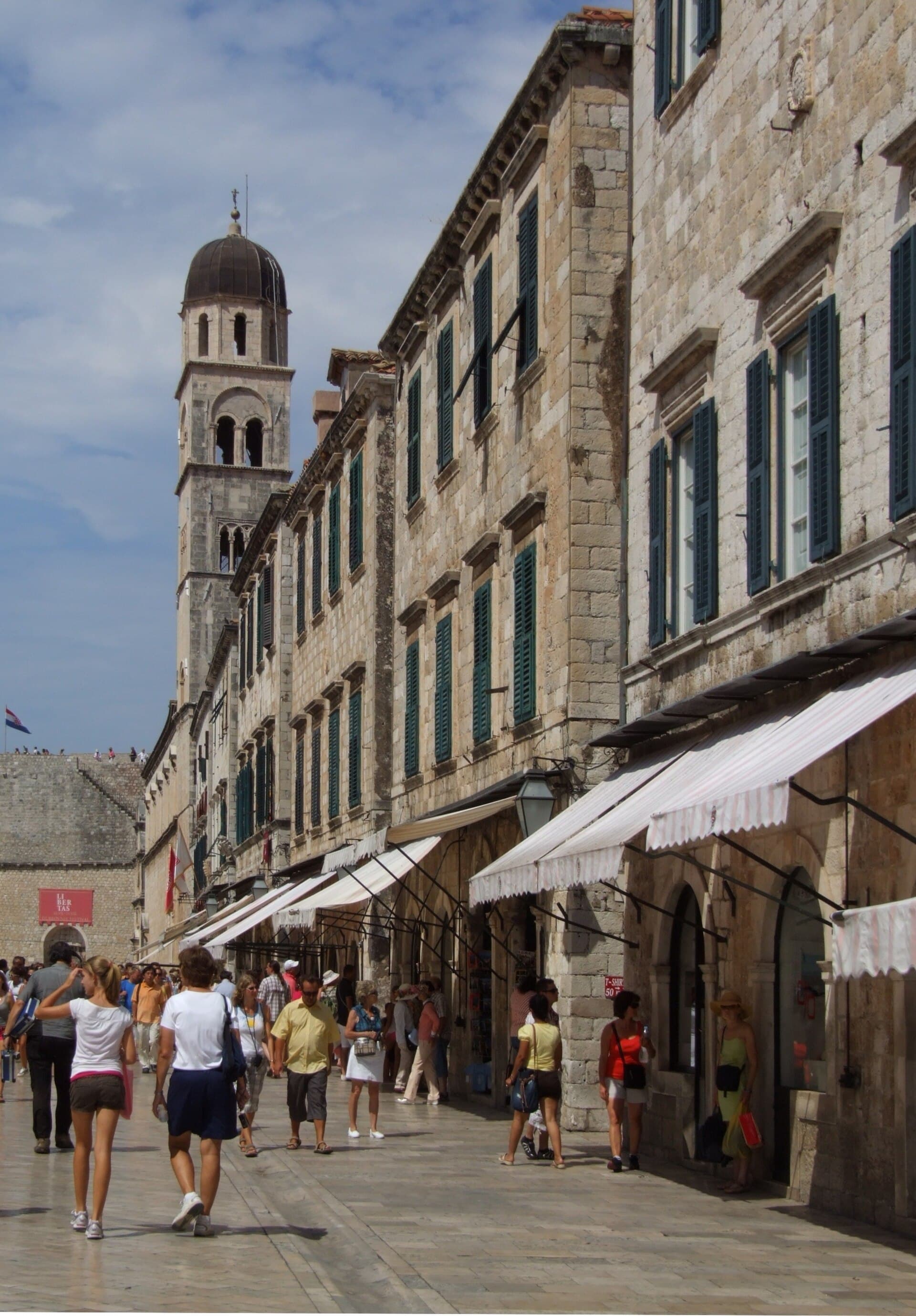
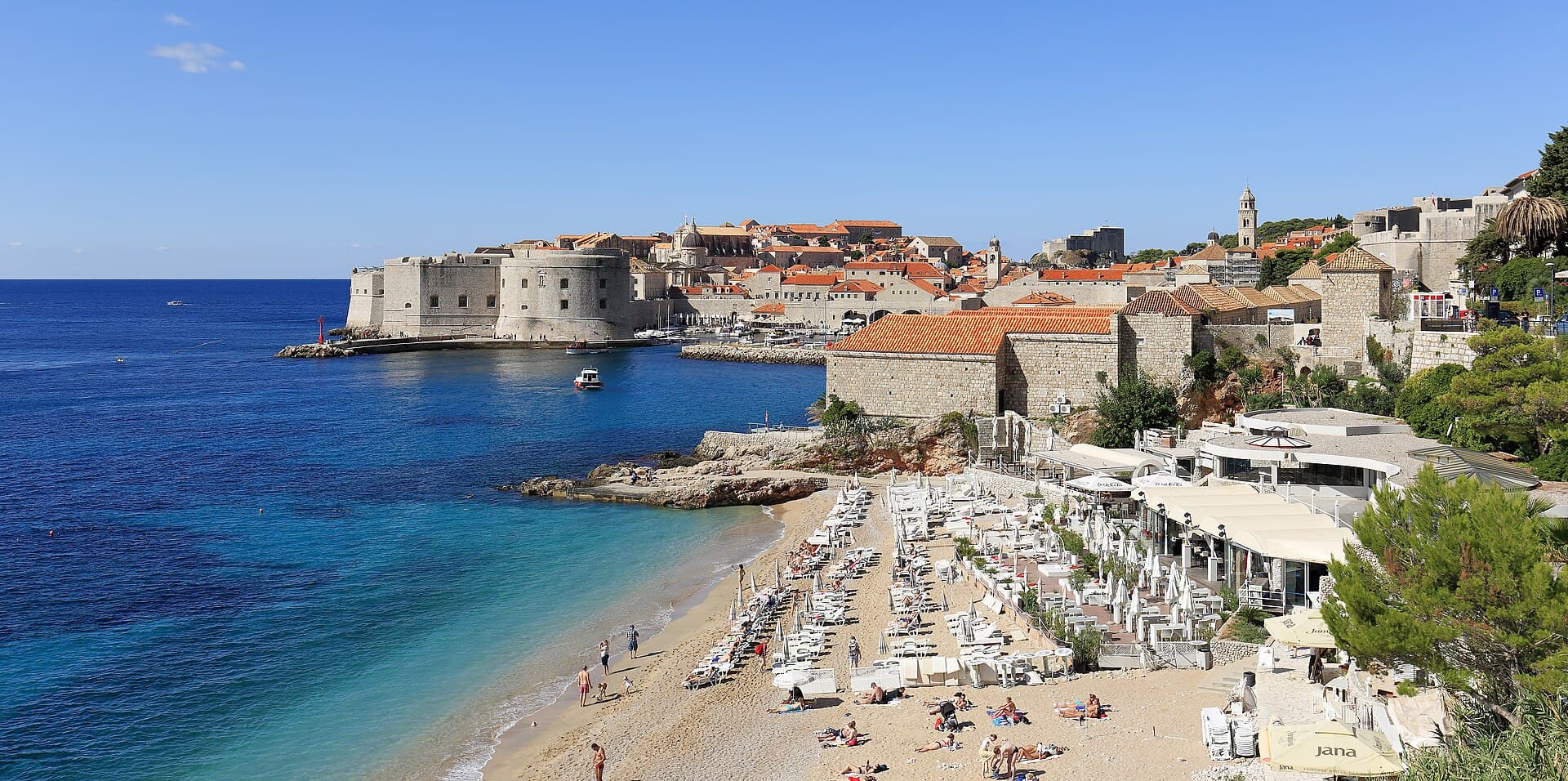
Old Town feels special because the city is still best at its edges: early in the morning, late at night, and in the quieter moments between the main crowds. Staying there lets you borrow those hours naturally. You can wander Stradun before breakfast, slip out for a late drink, and feel like Dubrovnik belongs to you for short stretches. The cost is that you also inherit the city’s least forgiving logistics.
Comparison note 02
Why Lapad is easier to live with
Lapad is easier because it asks less from you between the headline moments. Rooms tend to be more spacious, arrivals more straightforward, and downtime more natural. You can swim, rest, or have dinner without every plan being routed through a gate. That does not make it more exciting than Old Town. It makes it more sustainable, which is often the better bargain on a longer or hotter trip.
Comparison note 03
Who should pick which
Pick Old Town if this is a short first trip, the historic core is the emotional reason you came, or you know you will use the city most at early and late hours. Pick Lapad if you are traveling with family, want proper hotel comfort, hate arrival-day friction, or know you need beach time and recovery built in. The right answer depends less on taste and more on what kind of tired you want to feel at the end of each day.
Comparison note 04
The key tradeoff: immersion versus comfort
This really is the trade: immersion versus comfort. Old Town gives you the stronger setting. Lapad gives you the easier life. Neither side is a trick answer. You just need to be honest about whether the trip gets better from being more atmospheric or more forgiving.
Comparison note 05
This comparison matters if you are choosing between romance and recoverability
Use this comparison when you already know Dubrovnik is the destination and the real question is how intense you want the base to feel. Old Town wins when the fantasy is stepping out into stone lanes and soaking up the city after day visitors thin out. Lapad wins when you want enough comfort left to enjoy Dubrovnik instead of constantly managing it. That choice matters more here than in many cities because Dubrovnik’s strengths and inconveniences are both unusually concentrated.

Comparison note 06
Compare the repeated routes, not just the postcard photos
A practical way to decide is to picture the repeated routes. In Old Town, the easy loops are walls, restaurants, harbor edges, and late strolls; the hard parts are airport day, luggage, and some pickups. In Lapad, those priorities flip. You get easier hotels, easier water access, and easier recovery, but you must intentionally go into the center. Ask which pattern sounds more like your actual vacation, not your most cinematic moment.
Comparison note 07
The false assumptions behind Old Town versus Lapad searches
A lot of searchers assume Old Town is automatically “better” and Lapad is just the compromise. That is too simplistic. Old Town is better only if you will actively use what it gives you. Lapad is better only if you will actually value the breathing room, beach access, and fuller hotel experience. The wrong outcome is not choosing either area. It is choosing one for someone else’s version of Dubrovnik.
Comparison note 08
If neither Old Town nor Lapad is the clean answer
If you want the walls close but the logistics gentler, Pile is the classic compromise. If you want sea views and quick access without full immersion, Ploče often splits the difference well. On longer stays, a split stay can work, but on short trips it usually creates more packing friction than value. In many cases the smartest move is simply to choose the side of the tradeoff you care about more and stop trying to erase every downside.